
Only five of India's top 20 car models have seen a reduction in wait times over the past year.
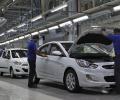
Domestic passenger vehicles sales rose by 23 per cent to a record of 37.93 lakh units in 2022 led by the likes of Maruti Suzuki, Hyundai and Tata Motors as the companies rode on easing of pandemic related challenges and semiconductor shortages to cash in on pent up demand, specially for SUVs. Other manufacturers like Toyota Kirloskar Motor and Skoda India also reported record sales in 2022. "The industry wholesales in January to December 2022 were just short of 38 lakh units.

The new Duster will go head-to-head with popular models like Hyundai Creta, Kia Seltos, Volkswagen Taigun, Skoda Kushaq, Maruti Suzuki Grand Vitara, Toyota Urban Cruiser Hyryder, MG Astor, etc in the highly competitive mid-size SUV segment.

The country's largest carmaker Maruti Suzuki India on Thursday reported 14 per cent increase in total wholesales at 159,044 units in November. The company had dispatched 139,184 units to dealers in November 2021, MSI said in a statement. Last month, the company's domestic sales rose 18 per cent to 139,306 units as against 117,791 units in November 2021, it added.

First images of the model that can replace Swift.

Domestic passenger vehicle dispatches witnessed a 13 per cent year-on-year rise in April as demand remained robust across segments, industry body Siam said on Friday. The total passenger vehicle dispatches from companies to dealers rose to 331,278 units last month compared to 293,303 units in April 2022. Market leader Maruti Suzuki India dispatched 137,320 units to dealers last month against 121,995 units in April last year.

The iconic brand is considering petrol powertrains for its entire Indian portfolio, which includes the Jeep Compass, Meridian, Grand Cherokee and Wrangler.

Major carmakers, including Maruti Suzuki, Hyundai, Tata Motors on Friday reported growth in their passenger vehicle sales in June as semiconductor shortage woes showed gradual signs of easing out. Other manufacturers, Kia India, MG Motor India and Skoda Auto India also reported robust sales growth last month. Maruti Suzuki India (MSI) reported 5.7 per cent increase in total wholesales at 1,55,857 units in June as compared to 1,47,368 units to dealers in June 2021.

Al-Nassr are one of 40 clubs from 20 leagues across the confederation drawn in 10 groups to face one another from Monday, with only the winners guaranteed to advance to the knockout rounds in the quest for the top prize of US$4 million.

Market leader Maruti Suzuki is putting finishing touches to its plan of finding its feet in what is being hailed as a battle of epic proportions in India's fastest-growing passenger vehicle segment, reports Arindam Majumder.

These companies join the likes of other global firms Hyundai, Suzuki, Toyota, KFC, and Pizza Hut which have also apologised for social media posts by their business associates in Pakistan supporting Kashmir Solidarity Day following backlash in India and call for boycott of their products.

Tata Motors plans to set up separate sales network for its electric passenger vehicles in current fiscal year as it looks to give differentiated experience to the buyers opting for the environment-friendly models, according to a top company official. The Mumbai-based auto major, which on Thursday introduced all-new versions of its Nexon EV and Nexon (internal combustion engine), said it will start experimenting with new outlets in some of the cities where EV volumes have gone up. "We'll have to separate them (sales outlets for EVs and ICE) given that we have different requirements of customers and also a growing portfolio (of EVs)" Tata Motors Passenger Vehicles managing director Shailesh Chandra told PTI in an interaction.

The promoter entities of JSW Group are in talks with several electric-car manufacturers in China to launch an electric car for the Indian market at Rs 15-20 lakh, a source close to the development said.

The automatic variant of the SUV is priced at Rs 11.99 lakh

Please send your queries to getahead@rediff.co.in with the subject line 'Cars' and experts from CarJasoos.com will answer your queries related to buying new or used cars.

Close to half a dozen more three-row premium mid-size models are expected to hit the road over the next two years.

RBI's interest rate decision, macroeconomic data and global trends would dictate terms in the equity market in a holiday-shortened week, analysts said. Besides, the focus will also be on foreign portfolio investors' trading activity, they added. Equity markets will remain closed on Tuesday for 'Mahavir Jayanti' and on Friday on account of 'Good Friday'.

The cost of open cells has seen an average increase of between 3 and 20%, and is higher for larger screen TVs in July, according to manufacturers of televisions
Driven by strong demand, the overall passenger vehicle dispatches crossed 3.35 lakh units in February as automakers, including Maruti Suzuki India, Hyundai, Tata Motors and Mahindra & Mahindra, reported robust sales during the month. The dispatches of more than 3.35 lakh units last month marked an 11 per cent over February 2022. It was also the highest ever overall wholesales in the month of February. The country's largest carmaker Maruti Suzuki India on Wednesday said its domestic wholesales rose 11 per cent to 155,114 units in February as compared with 140,035 units in the same month last year.

Yokohama beat Shandong to book Asian Champions League last 16 berth

'India is the sixth-largest market for the Kia Corporation, and contributes 8 to 9 per cent to our global sales.' 'We are eyeing 10 per cent market share over the next few years depending on customer demand and new product innovations.'

India is a market for low-priced cars with low running costs. The global majors don't have models that fit the bill; only Maruti and Hyundai have successful entry-level models, observes T N Ninan.

Ola Electric, India's largest maker of electric scooters, launched its most affordable ride on Tuesday, in an attempt to woo more customers and expand its electric two-wheeler lineup.

Billionaire Mukesh Ambani's Reliance Jio is India's strongest telecom brand in India, ahead of Bharti Airtel and Vodafone Idea Ltd, according to brand intelligence and data insights company TRA. TRA, formerly Trust Research Advisory, in its 'India's Most Desired Brands 2022' ranked companies according to their brand strength. Reliance Jio topped the telecom category, followed by Bharti Airtel, Vodafone Idea Ltd and BSNL.
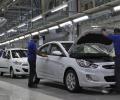
India's passenger vehicle exports rose by 26 per cent in April-June 2022 aided by enhanced shipments to Latin America and Africa and a low base of the year-ago quarter that was hit by the second wave of COVID-19. As per the latest data released by the Society of Indian Automobile Manufacturers (SIAM), passenger vehicle shipments rose to 1,60,263 units in the April-June period of this fiscal as compared with 1,27,083 units in the same quarter of 2021-22. Passenger car shipments saw an 88 per cent year-on-year growth at 1,04,400 units while utility vehicle exports rose 18 per cent to 55,547 units during the period under review, SIAM data showed.

That means a manufacturer looking at a market like India needs to decide whether small, cheap cars or small, expensive cars or both will work better for them, says Pavan Lall.

Amid better semiconductor chip supplies, the Indian automotive industry posted an 8 percent growth in production of vehicles across categories for the month of May, with three-wheelers (20 per cent) and passenger vehicles (16 per cent) leading the pack. Exports, however, dipped 21 per cent at an industry level. The industry also recorded its highest-ever May wholesales of domestic passenger vehicles (334,802 units), riding on high demand for sport utility vehicles (SUVs) and better supplies of semiconductor chips.

'Some of the launches may get deferred due to the semiconductor shortage, which is unlikely to get resolved before the second half of 2022.'

The previous May peak was observed in 2018 when the domestic PV wholesales stood at 301,238 units.

White is easy to maintain, looks brighter than other colours over a longer period, is the least commonly rejected colour among family members, has high resale value, provides better safety at night, absorbs less heat in the summer season, makes small cars look bigger, and is not considered inauspicious.
Indian automakers dispatched nearly 2.92 lakh passenger vehicles, the highest ever for February so far, driven by strong demand for cars and utility vehicles, industry body SIAM said on Friday. The total passenger vehicle dispatches from companies to dealers last month increased 11 per cent to 2,91,928 units from 2,62,984 units in February 2022. Passenger car sales rose to 1,42,201 units in February against 1,33,572 units in the year-ago period.

What worked for Hyundai in India when so many other auto manufacturers have had to eat humble pie? Pavan Lall finds out.

Ola Electric on Thursday teased five new electric motorcycles that the SoftBank-backed company is working on, announcing the range after selling electric scooters. The products are labelled cafe racer, an adventure tourer, a scrambler and a naked motorcycle. The motorcycles are expected to be launched next year and would include premium and mass-market versions, said sources.

The Carens is a warning for cars such as the Tata Safari, Hyundai Alcazar, Maruti Ertiga, Toyota Innova Crista and Mahindra XUV 700, because Kia punches much harder than others in its weight category.

Maruti Suzuki India (MSIL) does not anticipate growth in the small car segment because people continue to find these vehicles unaffordable, chairman R C Bhargava said on Wednesday. He said the market had clearly shifted towards the sport utility vehicle (SUV) segment and the company will go in the same direction. The domestic sales of utility vehicles jumped in India by 34.54 per cent to about 2 million units in FY23.

Tesla Inc, the world's largest electric car producer, is looking to make a significant investment in India, said its chief Elon Musk, who saw India as holding more promise than any other large country around the globe. Musk, after meeting Prime Minister Narendra Modi, said he plans to visit India in 2024. "I am confident that Tesla will be in India and we will do so as soon as humanly possible," Musk told reporters after the meeting.

Dealers across brands are slashing prices by Rs 20,000 to over Rs 1 lakh, depending on the car model.
Passenger vehicle exports from India increased 43 per cent in FY22, with Maruti Suzuki India leading the segment with dispatches of over 2.3 lakh units, as per the latest data by industry body SIAM. The total passenger vehicle (PV) exports stood at 5,77,875 units in 2021-22 fiscal, as compared to 4,04,397 units in 2020-21. Passenger car shipments saw 42 per cent growth at 3,74,986 units, while utility vehicle exports rose 46 per cent at 2,01,036 units during the last fiscal, the data by the Society of Indian Automobile Manufacturers (SIAM) showed.
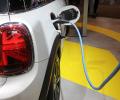
Electric vehicle retail sales in the country witnessed over three-fold jump last fiscal with two-wheeler offtake leading the segment, according to data compiled by automobile dealers' body FADA. Total electric vehicle (EV) retails reached 4,29,217 units in 2021-22, a rise of three-fold from 1,34,821 units in the financial year 2020-21, the industry body said. Total EV sales had stood at 1,68,300 units in the 2019-20 fiscal, it noted.

The compact segment where Sonet will be launched is crowded with the Maruti Vitara and Brezza, which top the sales' list, and a bevy of models from Mahindra & Mahindra apart from Hyundai's offering. But volumes in this are slightly higher than those in the mid-segment, making it attractive, says Surajeet Das Gupta.
